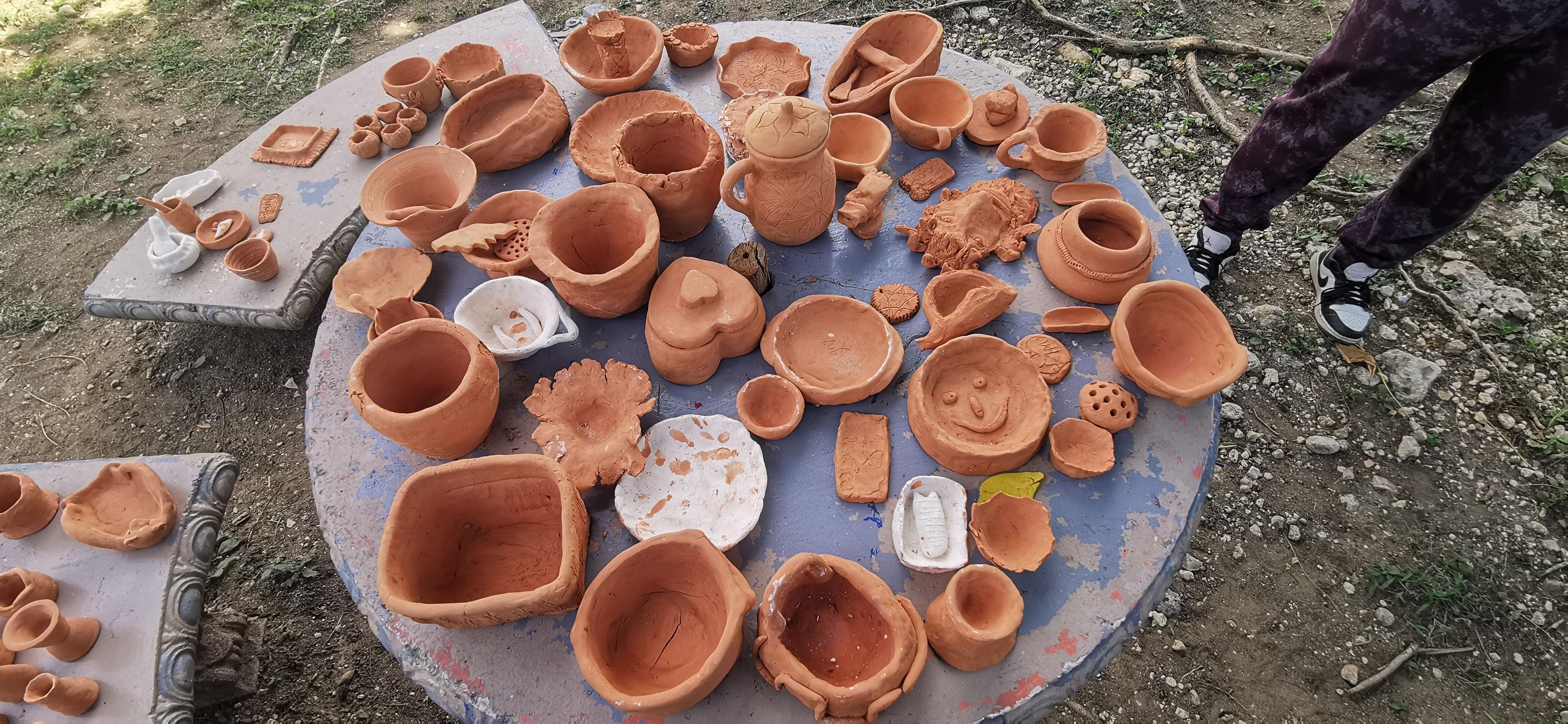
At the Rio Nuevo Great House/Village, twenty Jamaican artisans from communities along the island’s north coast are discovering new skills, confidence and possibilities through Taino-inspired pottery and craft training under the Linking Legacy and Livelihoods initiative with an aim to preserve the country’s heritage and create livelihood opportunities.
The twelve weeks long project valued at just over JMD $2-million began in August with funding from the Sandals Foundation and is implemented by the Built Heritage Jamaica in collaboration with the Tourism Product Development Company (TPDCo).
Throughout the workshops, participants from across St. Ann and St. Mary have learnt how to bring principles of modern and traditional Taino design, including the use of Taino glyphs to create their pottery pieces. The Taino were arawakan-speaking Indigenous people, who originally inhabited the Caribbean islands prior to the colonial era. They form part of the historical heritage of Jamaica through various remnants in arts and culture. Training also includes clay preparation, kiln firing, wood and earth pits.
Alongside pottery, the artisans are learning basketry (using the loom method) and other small craft techniques, as well as business development support and exposure to additional markets. As part of the project, some finished pieces are hoped to be sold in craft markets as well as hotel gift shops islandwide.
Director of Operations at Sandals Foundation, Karen Zacca said “We are very excited about this project as it seeks to nurture the growth and development of our island’s artistic cultural ambassadors. Together, we can share these unique interpretations with visitors for years to come.”
Karimah Palmer is a twenty-eight year old jewelry maker, who always explored arts, winemaking and natural products production. She intends to incorporate pottery and sculpting into her jewelry pieces such as pendants, earring and jewelry boxes.
“The artisan sessions were fun and impactful. I learned so much within a short period of time including the importance of patience, making mistakes so I could learn from them, balance and pressure control. It also made me appreciate my heritage more through the historical ways pottery was done and is still used today,” Ms. Palmer shared.
On his part, seventy-year-old Derek Harris, who works in Highgate, St. Mary started his artisan journey in wood carving before building his career as a photographer for over fifteen years.
He was intrigued by the many ways of using clay. “I find clay fun to work with and I certainly will be doing more ceramic pieces. I now believe I can become a famous artist if I practice more and I’m looking forward to more tutoring.”
Maxine Harris, Vice and Acting Chairman of the St. Mary/St.Ann Chapter of Built Heritage Jamaica said the organisation is intentional with linking Jamaican heritage and the livelihood of community stakeholders.
“During the workshops, participants were caught up in discussions on Taino and Maroons and were excited, although they incorporated self-inspired design ideas, some were also inspired by traditional items their grandmother used like a ‘waspan’ with the wooden scrubber,” Ms. Harris said.
She is optimistic that the participants will be able to access additional income from improving or acquiring these skills. “In November, we will place emphasis on exposure to markets not just for pottery but also embroidery,” she stated.
Over the long term, there are plans to add training in stone and calabash art, using materials that are readily available in the area. This is intended to attract more young people to craft as a part-time or full-time livelihood option.
Built Heritage Jamaica's goal is to expand and strengthen authentic, community-driven product offerings that reflect the beauty and nature of the island. The Sandals Foundation is pleased to support Built Heritage Jamaica’s mandate to preserve the island’s physical heritage and help people understand the culture it represents.
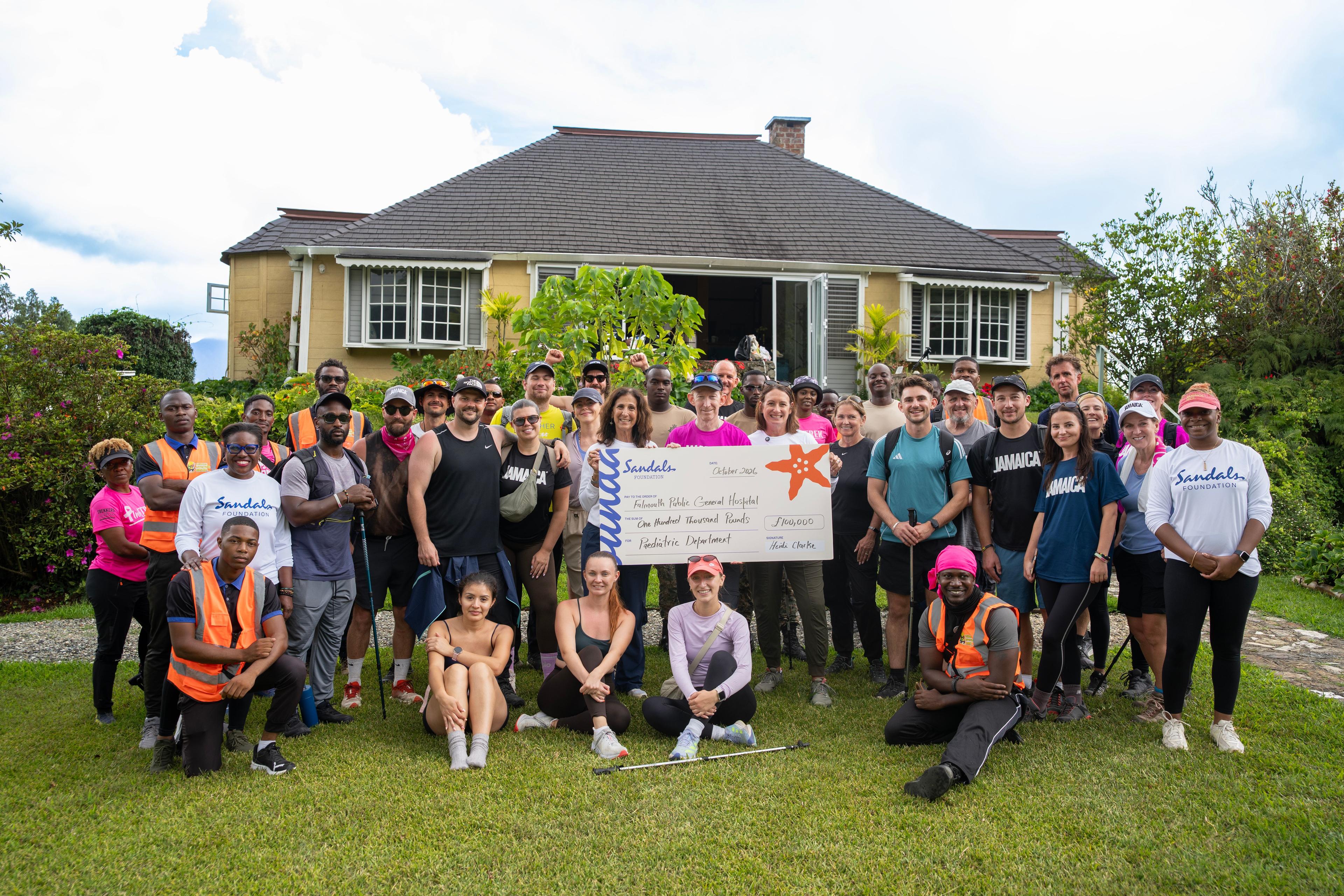
The paediatric and neonatal unit at the Falmouth Public General Hospital is set for a new beginning with the successful completion of the Sandals Foundation Island Challenge.
The trailblazing four-day endurance experience brought together some 30 UK and 16 local participants to run, hike and paddle through some of Jamaica's most iconic locations. On Monday, October 5, the team celebrated their success at Clifton Mount within the Blue Mountain range, having raised the targeted £100,000.
The four-day experience saw participants completing a 10km run from St. Mary to St. Ann, a 5km kayak through the White River Fish Sanctuary, climbing the Dunn's River Falls, and enduring a 3hour trek and tree planting activity in the Bogue 2 Forest Reserve. On Day 3 they completed a 21km half marathon from Falmouth to Chukka Good Hope, and on Day 4 - hiked through the lush Blue Mountain Range, experiencing the glowing Caribbean sun and rugged terrain in a different way.
Executive Director at the Sandals Foundation, Heidi Clarke, said the event provided a unique opportunity to showcase Jamaica's beauty and culture. She commended the challengers for completing what was not an easy feat.
"This has been a unique opportunity to showcase Jamaica and connect visitors – to its beauty, culture, food and communities. I am incredibly proud of what we were able to achieve. Our challengers were committed to pushing their bodies to the limit all for an incredible cause.
“For us,” Clarke continued, “It’s all about providing lifesaving equipment to our hospital and equipping our heroes – the doctors and nurses who work hard every day to save lives and to give our children a healthy start."
Equal to the resilience of the participants, Karl Thompson, Managing Director at Unique Vacations (UK) Ltd. says the success of the Island Challenge is because of the local and international partners.
"A huge thanks to everyone who made this possible. We came as a team, and we'll leave as a team, representing every individual, corporate, and travel partner who believes in the mission and the cause."
The Falmouth Public General Hospital, having lost its roof during Hurricane Melissa in October 2025, will receive critical neonatal and paediatric equipment including incubators and beds to serve our island's youngest and most vulnerable.
Next year, the philanthropic organisation will take the fundraising event to a new island, continuing its mission to strengthen paediatric and neonatal healthcare services across the Caribbean.
Island Challenge Jamaica 2026 is made possible through the kind support of a host of local and international partners including Sandals Resorts International, Island Routes, Jamaica Tourist Board, British Airways, Chukka Caribbean Adventures, Mystic Mountain, Digicel, The Best Dressed Chicken, Wisynco, CPJ, Rainforest Foundation, Digicel, Jamaica Observer, Tour Jamaica Destinations Management Co. Ltd., Oxford Trading Ja Ltd., Trekkers Adventures Jamaica, the Jamaica Defence Force, Urban Development Corporation, the Forestry Department of Jamaica, the Western Regional Health Authority, the National Solid Waste Management Authority, CIBC, and A.L. Golaub & Sons all on board to create this unforgettable experience.
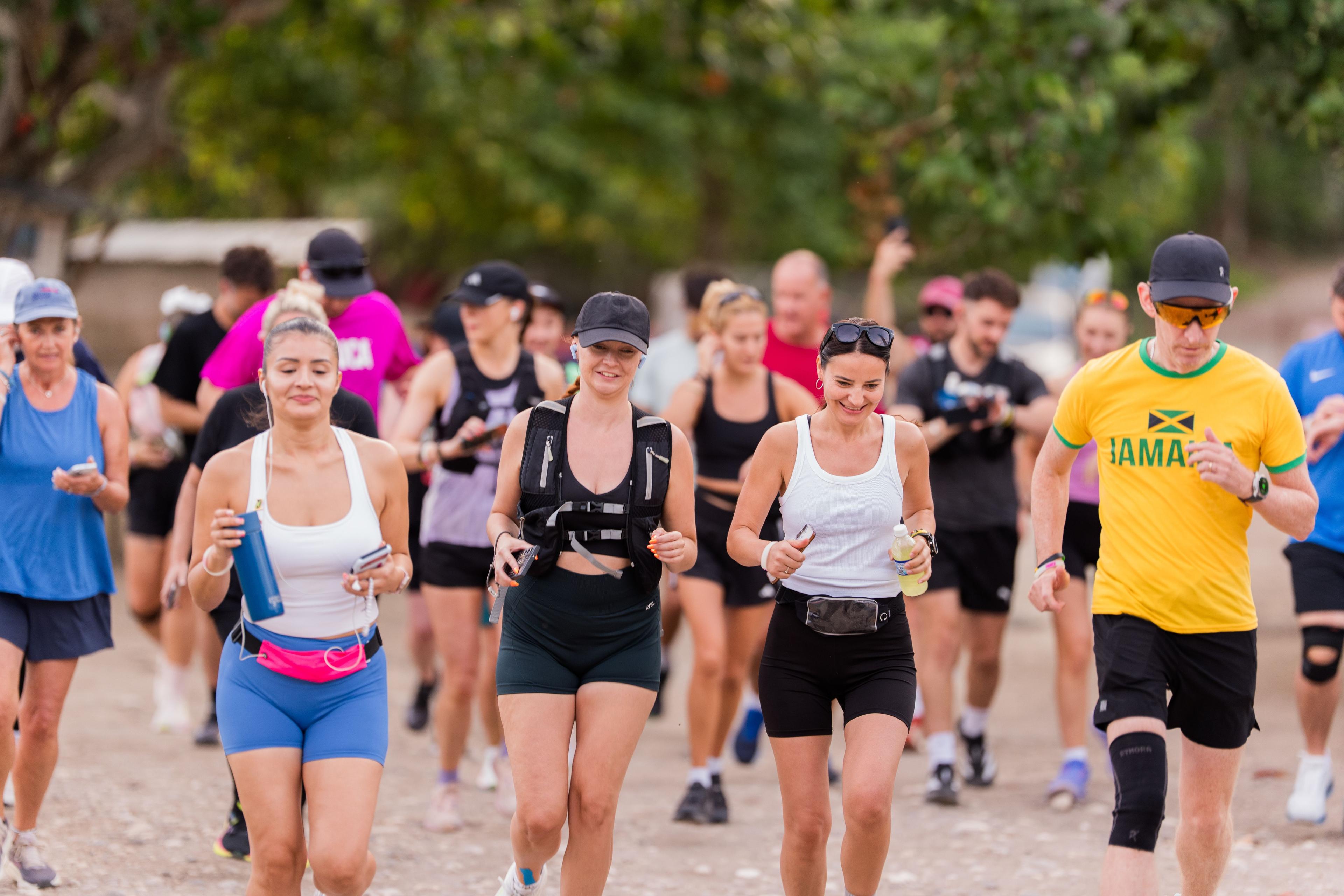
The Sandals Foundation Island Challenge – a four-day fundraising endurance experience – is off to an electrifying start after an early morning run and kayak journey across St. Mary and St. Ann. Blazing across the Caribbean in a different island each year, the Sandals Foundation Island Challenge has made its debut in Jamaica, bringing some 30 UK athletes and 13 local participants together to run, kayak, and hike across the rugged terrain and lustrous waters of the island’s north coast.
From October 2 - 5, they will put their minds and bodies to the test to raise £100,000 to strengthen paediatric and neonatal healthcare at the Falmouth Public General hospital.
Day 1 of the Challenge saw 30 athletes from across the UK running 10 kilometres from the Rio Nuevo Fishing Beach to Sandals Ocho Rios Beach Club, then getting on the sea for a one-hour kayak journey across the White River Fish Sanctuary before returning to Sandals Ocho Rios Beach Club.
Heidi Clarke, Executive Director at Sandals Foundation, says the cause behind the challenge helps to keep athletes motivated through strenuous physical activities.
“ It’s been an incredible first day with athletes pushing themselves to the limit. All have raised the funds to benefit our children on the island and we are extremely honoured to be able to support the Paediatric and Neonatal Department of the Falmouth Public General Hospital. The next three days will require them putting it all on the line but they are motivated knowing that every step and stride is bringing hope to families.”
Born out of a conversation with his colleagues after completing a half-marathon in the UK some years ago, Karl Thompson, Managing Director at Unique Vacations (UK) Ltd., says “The idea for Island Challenge came about during a conversation I had with some colleagues after we ran a marathon in the UK. I thought ‘we should do this in the Caribbean, where our philanthropic arm operates, and help improve the lives of children.’ Now this is our fourth event, and, based on our first day, we’re off to a great start. The energy was sky high; The people, the support, it was brilliant.”
Three-time participant, Bradley Mills says, “The island is beautiful. Coming into the Ochi Beach Club at the end of the run, in the final kilometer, everyone was cheering us on and it created such a good vibe. The whole team was there, so it was really an amazing experience.”
And for first time participant, Carla Hoyos, says, “It was lovely. Although I wasn’t prepared for the hills because we don’t have many where I live, the run was great…And the team was great too.”
On Saturday, October 3, the team will climb the world-famous Dunn's River Falls, followed by a 10km rainforest trek and tree planting activity in the Bogue 11 Forest. On Sunday, they will take on a 21km half marathon with 13 local participants through the beautifully preserved Georgian town of Falmouth, passing the beneficiary Falmouth Public General Hospital, through port, under bridge to main road, enter Hague and continue to Good Hope waterfall; and on Monday, the group will tackle a military endurance challenge in Newcastle, St. Andrew before conquering partial hike of the Blue Mountain some 4,500 feet above sea level.
The Jamaica staging follows three successful stagings held in Antigua and Barbuda in 2023, Saint Vincent and The Grenadines in 2024, and Saint Lucia in 2025. Collectively, the event has raised more than £300,000, benefiting 1,800 babies across the Caribbean.
The next three days promise to be a must-follow. Island Challenge Jamaica 2026 is made possible through the kind support of a host of local and international partners including Sandals Resorts International, Island Routes, Jamaica Tourist Board, British Airways, Chukka Caribbean Adventures, Mystic Mountain, Digicel, The Best Dressed Chicken, Wisynco, CPJ, Rainforest Foundation, Digicel, Jamaica Observer, Tour Jamaica Destinations Management Co. Ltd., Oxford Trading Ja Ltd., Trekkers Adventures Jamaica, the Forestry Department of Jamaica, the Western Regional Health Authority, the National Solid Waste Management Authority, CIBC, and A.L. Golaub & Sons all on board to create this unforgettable experience.
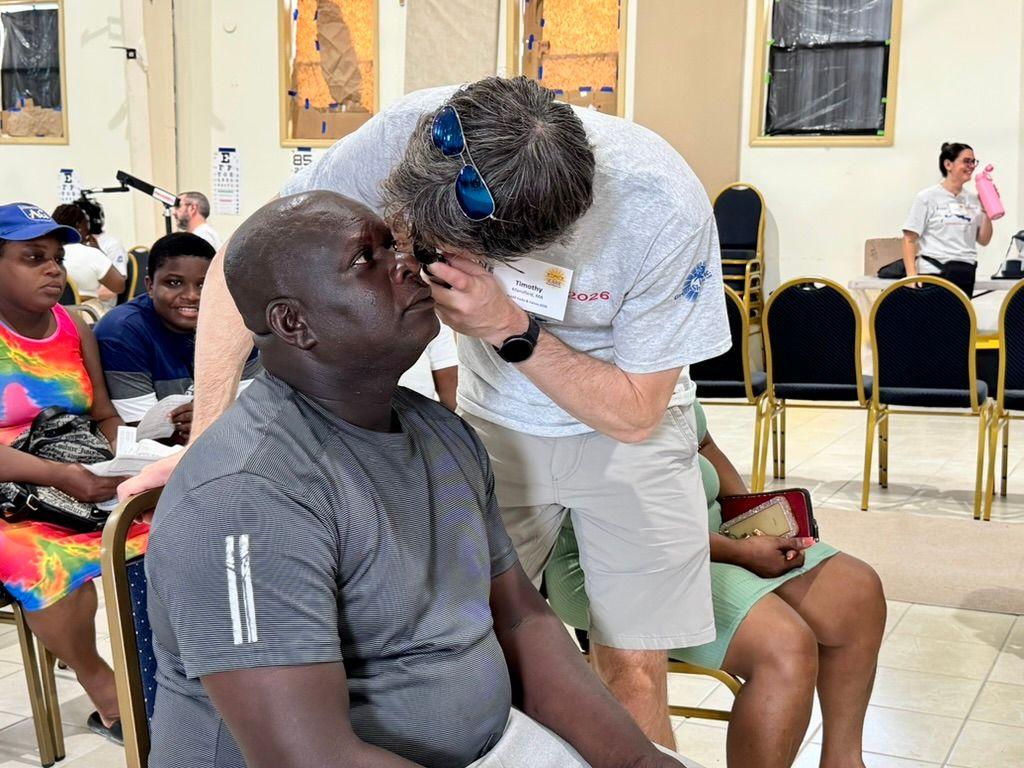
Beaches Turks and Caicos, the Sandals Foundation, and Great Shape Inc.’s iCare programme have completed a record-breaking one-week humanitarian eye care mission in Providenciales, delivering free optical services to more than 4,800 individuals. The 2026 venture brought together 52 volunteer eye care professionals from the United and Canada? who provided comprehensive screenings, advanced laser treatments, and thousands of pairs of glasses to residents across the Turks and Caicos Islands.
The mission’s services covered multiple areas of eye health as medical volunteers conducted over 1,000 health screenings paired with educational sessions on eye care and the risks associated with prolonged screen use. Among the most significant clinical achievements were 122 Selective Laser Trabeculoplasty (SLT) procedures, a treatment for open-angle glaucoma, and 13 panretinal photocoagulation (PRP) procedures, an outpatient laser therapy used to halt the growth of abnormal, fragile blood vessels on the retina that can cause bleeding and vision loss.
In addition to clinical interventions, the team distributed over 150 pre-made prescription glasses, more than 2,500 sunglasses, and over 1,400 reading glasses during the mission week. A further 700 custom prescription glasses are being completed and will be delivered to patients in the coming weeks. In addition to adults, students from 16 government and non-government schools throughout Providenciales also received vision testing and care.
Kyle Knowles, Minister of Health and Human Services for the Turks and Caicos Islands, praised the collaboration as “timely” and highlighted the unmatched visual support provided to the community. “We are grateful for this continued collaboration with the TCI government and the Sandals Foundation,” Knowles said. “We have seen where these eye care professionals come here and share their expertise with our schools and our communities, free of charge. This is what teamwork looks like here in the Turks and Caicos Islands.”
Deryk Meany, General Manager of Beaches Turks and Caicos, noted the historic scale of the mission. “We have witnessed a record number of optical services being offered this year which augurs well for the people and children of the Turks and Caicos Islands,” Meany said. “The support that the Sandals Foundation and Great Shape Inc.! has received from the government of the TCI is phenomenal. As an organization, we are conscious of the support that is needed and the opportunities that we have to share in this mission.”
Rachel Taylor, Minister of Education, Youth, Sports and Culture emphasized the value of early screening for students in an era of increasing digital device use. “To be able to provide early screening for our students is priceless,” Taylor said. “With the consistent use of gadgets by our children, the health screening and education is timely for us within the education ministry. We are grateful for this support from the Sandals Foundation and the Great Shape team. If there are challenges identified by the team, parents will be able to provide the necessary care for the children.”
For Nadienne Crossman, vice principal of the BEST Institute, the competence and warmth of the volunteer team was a highlight. “The services provided by these professionals was unmatched,” Crossman noted. “The team who visited our school allowed every student to feel comfortable while they were being tested. As teachers, when we got to the community site, we were treated with respect by everyone. To be able to see multiple specialists free of charge was outstanding. Sandals Foundation and the Great Shape team provided a safe space for us to care for our eyes.”
Steven Stern, Founder of iCare, credited the enthusiasm of volunteers and the seamless support from local partners. “The team for this project was enthusiastic with every client that we saw,” Stern said. “They were creative in using technology to assist with translation while they also learned so much about the TCI culture. The support from the Sandals Foundation and the government of the TCI was simply magical. We are looking forward to returning already.”
The Sandals Foundation coordinates logistics and covers costs for transportation, food, and beverages for the iCare clinic and its teams, while Beaches Resorts provides accommodation free of charge. The close of the 2026 mission stands as a testament to the power of cross-sector collaboration — uniting government, hospitality, and nonprofit expertise to safeguard vision and opportunity for an entire community.
